
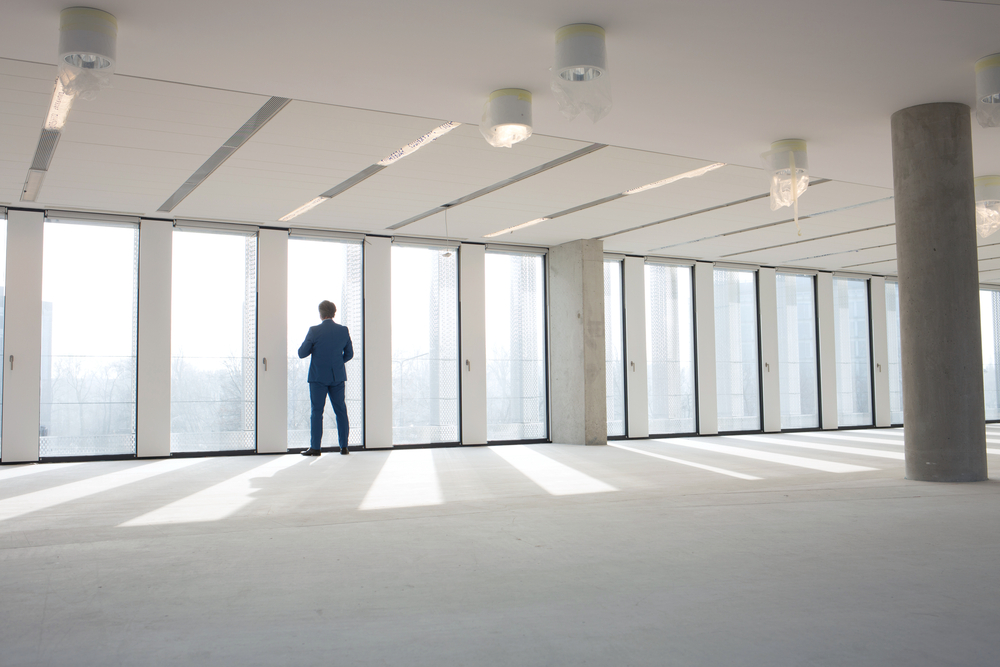
Somewhere in Northridge right now, a founder is sitting at a kitchen table (because they don’t have an office yet — that’s the whole problem), staring at a lease agreement that’s longer than their business plan. Five years. Personal guarantee. A CAM fee they can’t quite decode. Their pen is hovering. Their palms are sweating.
Sound familiar?
Before you sign anything, Circle Hub is about to talk honestly about office rent in Northridge CA — what it actually costs, when a traditional lease genuinely makes sense, and why a growing number of local businesses are ditching the 5-year commitment for something a lot more flexible.
Spoiler: this isn’t a “leases are evil” post. It’s a “know what you’re buying” post.
What “Traditional Lease” Actually Means in 2026
A traditional office lease sounds simple: you rent a space, you pay monthly, you work there. In practice, it’s more like adopting a very expensive, very demanding pet.
Here’s what you’re typically signing up for:
- Multi-year commitment — usually 3 to 5 years, sometimes longer
- Fixed square footage — you pay for the same space whether you use it or not
- Personal guarantee — your landlord wants a piece of you personally, not just your LLC
- Security deposit — often 2-3 months’ rent, sometimes more for newer businesses
- CAM fees — “Common Area Maintenance,” a delightfully vague line item that covers everything from landscaping to the lobby’s questionable art
- You handle the rest — furniture, internet, phones, cleaning, security, insurance
It’s less like a gym membership and more like a gym membership you signed while drunk on ambition, that auto-renews, and that charges you even when the gym is closed.
The Northridge Market, in Plain English

Northridge sits in a strange sweet spot. It’s got CSUN nearby feeding a steady stream of young talent, easy access to the 405 and the 118, and a business mix that ranges from healthcare and professional services to media and tech-adjacent startups. That combination makes it an attractive place to plant a flag — which is exactly why landlords aren’t in a rush to make leasing terms more flexible.
Commercial space here isn’t scarce, but it’s not cheap either, and multi-year leases are still the default offer on most listings. Unless you specifically ask for shorter terms (and negotiate hard for them), you’ll typically be steered toward the standard 3-to-5-year structure landlords prefer, because it’s better for them, not necessarily for you.
That’s worth sitting with for a second: the “default” lease terms in most commercial listings were designed around landlord risk, not tenant flexibility. Nobody’s hiding that — it’s just rarely said out loud during a tour.
The Real Cost of Office Rent in Northridge, CA (Broken Down)
Here’s where it gets interesting. When people ask about office rent in Northridge CA, they usually mean the base rate per square foot. That number is only the opening bid.
The full bill typically includes:
| Cost Category | What It Covers |
|---|---|
| Base rent | Your square footage, monthly |
| CAM fees | Shared building upkeep, often 15-25% on top of base rent |
| Utilities | Electricity, water, HVAC — sometimes separately metered |
| Furniture & build-out | Desks, chairs, conference tables, paint, flooring |
| IT setup | Internet install, networking, phone systems |
| Insurance | Liability coverage the landlord will require |
| Parking | Sometimes included, often not |
Then there are the invisible costs — the ones that don’t show up until month three. The HVAC unit that dies in July. The parking situation that got “temporarily” worse during a neighboring construction project. The build-out overage because the contractor found something behind the wall nobody wanted to find.
By the time you add it all up, that friendly per-square-foot number on the listing sheet has usually grown a second, less friendly number hiding underneath it.
Where Traditional Leases Still Make Sense
Let’s give credit where it’s due — because a lease isn’t automatically the wrong move.
A traditional lease is worth it if:
- You’ve got 20+ employees and need permanent, branded HQ space
- Your business needs heavy physical infrastructure — labs, inventory storage, manufacturing equipment that isn’t moving anywhere
- You want to lock in today’s rate as a hedge against future increases, and you’re confident about your headcount for the next 5 years
If that’s you, a lease is a legitimate long-term bet. This post isn’t trying to talk you out of it. It’s trying to make sure you’re choosing it on purpose — not just because “that’s what businesses do.”
For everyone else? Keep reading.
Why Businesses Are Rethinking Office Rent in Northridge CA
Work changed. Leases didn’t catch up.
Hybrid schedules are now the norm rather than the exception, and companies are responding by shrinking their real estate footprint instead of expanding it. According to CBRE’s 2026 Global Workplace & Occupancy Insights report, about 57% of organizations plan to reduce office space over the next three years — a direct result of teams no longer needing a fixed desk for every employee, every day.
That same report found something even more telling: no organization surveyed now targets one desk per employee anymore, and 69% report that more than 40% of their workforce shares desks. Desk sharing isn’t a scrappy startup workaround anymore — it’s standard operating procedure, even at large companies with plenty of budget to spare. Global building utilization actually hit a five-year high in 2025, but that’s happening with fewer permanent desks per person, not more square footage overall. Offices are busier on the days people show up, and emptier the rest of the week — which is exactly the pattern a rigid, fixed-footprint lease is worst at handling.
Translation: paying for a fixed block of office rent in Northridge CA based on your total headcount is increasingly a bet on a workplace model that’s fading. You’re not paying for what your team uses. You’re paying for what your team used to use.
Meanwhile, startups and small teams face the opposite problem — unpredictable growth. You might be 4 people this quarter and 11 people next quarter. A 5-year lease doesn’t flex. It just sits there, charging you for the size you were when you signed it.
Coworking vs. Traditional Lease: Head-to-Head
Let’s put them side by side, no spin:
| Factor | Traditional Lease | Coworking Space |
|---|---|---|
| Contract length | 3-5 years | Month-to-month or short-term |
| Setup time | Weeks to months | Same day |
| Furniture & IT | You buy and manage it | Already included |
| CAM fees | Yes, and often opaque | Nonexistent — it’s just baked in |
| Scaling up or down | Requires renegotiation or subletting | Add or drop a desk anytime |
| Networking | You build it yourself | Built into the building |
| Amenities | Whatever you install | Meeting rooms, kitchen, events, often more |
The pattern here isn’t subtle. Coworking trades a rigid, front-loaded commitment for flexibility and predictability — you know your monthly cost, and it doesn’t come with a maintenance emergency fund built in.
Compare that to the average office rent in Northridge CA, where your “final” monthly number is really an estimate until the first CAM reconciliation letter shows up.
Enter Circle Hub: Northridge’s Flexible Alternative
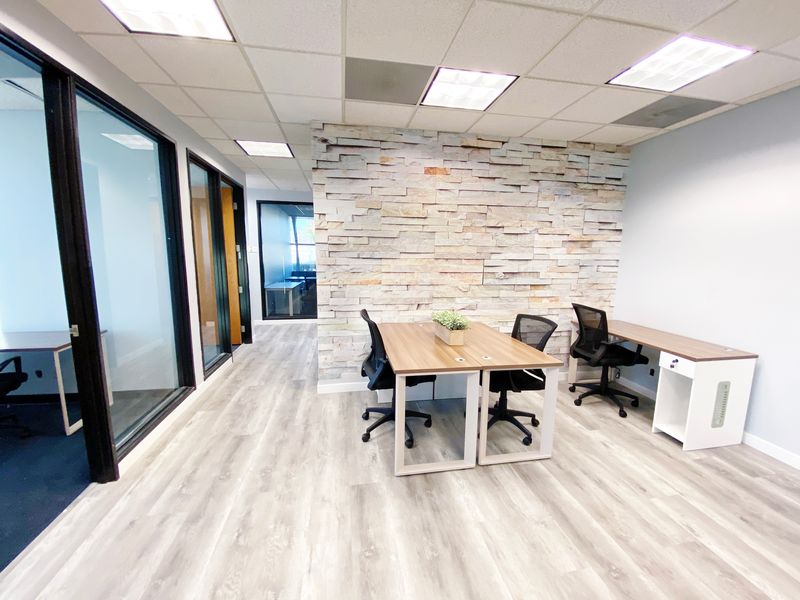
This is where Circle Hub comes in — not as a compromise, but as the upgrade nobody told you was available.
Instead of gambling on a rigid 5-year lease, imagine:
- Month-to-month terms — no personal guarantee, no multi-year anxiety
- Private offices and hot desks — scale from 1 desk to a full team without breaking a lease
- Meeting rooms included — book them when you need them, skip the overhead when you don’t
- Furniture, internet, and utilities handled — walk in with a laptop, walk out with a business
- A built-in community — other founders, freelancers, and small teams down the hall, not a silent floor of empty offices
There’s also the part that doesn’t show up on a spreadsheet: momentum. A traditional lease can feel like a waiting room — you’re paying for space while you wait to grow into it. A coworking space feels like you already arrived. People are working, meeting, building things around you. That energy is contagious, and it’s genuinely hard to replicate alone in a leased suite with your name freshly painted on frosted glass.
Circle Hub members consistently mention the same thing: the space pays for itself in flexibility alone, long before you even count the money saved on furniture and IT.
Quick Decision Checklist: Lease or Coworking?
Not sure which camp you’re in? Run through this:
Choose a traditional lease if:
- You need 20+ dedicated desks today
- Your work requires heavy, immovable equipment
- You’re confident about headcount for 5+ years
- You want a fully branded, standalone HQ
Choose coworking if:
- Your team is under 20 people (or growing unpredictably)
- You’re running hybrid or flexible schedules
- You’d rather not manage furniture, IT, or CAM disputes
- You want to start working this week, not this quarter
- Cash flow flexibility matters more than square footage
If you checked more boxes in the second list, you already know what this post is about to suggest.
Frequently Asked Questions
Is coworking actually cheaper than a traditional lease?
Usually, yes — once you factor in furniture, IT setup, CAM fees, and the deposit you’d otherwise have tied up for years. Coworking bundles most of those costs into one predictable monthly rate.
Can I get a private office in a coworking space, or is it all open desks?
Both are typically available. Most coworking spaces, including Circle Hub, offer private offices for teams that want a door, alongside hot desks and dedicated desks for solo workers and freelancers.
What happens if my team grows fast?
This is where coworking wins outright. Adding desks or moving into a bigger private office usually takes a conversation, not a renegotiated lease and a new build-out.
Is a traditional lease ever the cheaper option long-term?
For very large, stable teams locking in a low rate for 5+ years, sometimes yes — assuming rents rise and your headcount doesn’t shrink. It’s a bet, not a guarantee.
Final Verdict
Traditional leases aren’t dead. For a specific type of business — big, stable, equipment-heavy — they still make sense. But for most growing, hybrid, or early-stage teams in the Valley, a rigid multi-year lease is solving a problem you don’t actually have anymore.
Office rent in Northridge CA doesn’t have to mean five years of CAM fees, furniture invoices, and a personal guarantee hanging over your head. It can mean a desk that’s ready the day you need it, and gone the day you don’t.
Curious what that actually feels like? Come tour Circle Hub, grab a day pass, or just stop by and see what working somewhere that already gets it feels like. No pen required.