

It’s 2:14 AM. You are currently staring at a microscopic crack in your ceiling, wondering if that email you sent to the marketing department at 5:01 PM sounded too aggressive because you used a period instead of an exclamation point. Your heart is doing a rhythmic tap dance against your ribs, and your brain is running a marathon through every what-if scenario possible. Congratulations: you are a victim of the modern epidemic that manifests as the monster under the bed: work stress.
We’ve been sold a lie that says hustle culture is the price of entry for success. But nobody mentioned that the price of entry also includes chronic insomnia, a twitching eyelid, and the inability to remember what a hobby feels like.
Modern work stress is a biological catastrophe disguised as professional ambition. We are living in a world where the office is no longer a place you go, but a ghost that follows you into your bedroom, sits on your chest, and refuses to let you hit REM sleep. Read on as Circle Hub explains how to overcome this!
The Biology of the Buzz: Why Your Brain Won’t Shut Up
To understand why you can’t sleep, you have to understand that your brain is essentially a very old computer running very new, very glitchy software. Back in the day, our stress response was reserved for things that wanted to eat us. When a saber-toothed tiger showed up, our bodies flooded with cortisol and adrenaline. We either fought the tiger or ran away.
Today, that tiger has been replaced by an “Urgent: Circle Back?” Slack notification.
Your brain, bless its primitive heart, cannot tell the difference. When you experience chronic pressure at the office, your HPA axis (the hypothalamus-pituitary-adrenal axis) stays in a state of high alert. You are effectively marinating your brain in cortisol all day. By the time you hit the pillow, you’re tired but wired. According to a study by the Sleep Foundation, stress and sleep have a bidirectional relationship: the more stressed and anxious you are, the less you sleep; and the less you sleep, the more your brain loses its ability to regulate emotions and focus. It’s a physiological blue screen of death.
The Architecture of Anxiety: The Bed-Office Trap

If you’ve been working from your couch, your dining table, or, heaven forbid, your bed, you have committed a cardinal sin of sleep hygiene: you’ve nuked your contextual anchoring.
Your brain is a master of association. When you go into a movie theater, your brain smells popcorn and thinks, Time to relax. When you walk into a gym, it thinks, Time to sweat. But when you spend eight hours a day answering emails from your duvet, you are teaching your brain that the bed is a place for high-stakes negotiation and deadline panic.
This is how your brain begins to associate your Egyptian cotton sheets with work stress. By the time you try to turn the lights off, your subconscious is still looking for a spreadsheet. To fix your sleep, you have to fix your space. You need a Third Space: a location that is neither your home nor a traditional, soul-crushing corporate cubicle farm.
This is where the psychological magic of a coworking space comes in. By moving your tasks to a professional environment like Circle Hub, you are drawing a hard, physical line in the sand. When you leave the building, you leave the work. Your brain receives a clear signal: The hunt is over. We are back in the cave. We are safe.
The Remote Work Paradox: Flexibility or Eternal Bondage?
Remote work was supposed to be the dream, wasn’t it? We were going to work in our pajamas and have so much work-life balance. Instead, we’ve just turned our homes into 24-hour call centers.
The lack of a physical commute has stripped away the decompression chamber that humans need to transition between roles. Without the drive home to listen to a podcast or scream into the void of traffic, we transition from Project Manager to Parent/Partner in approximately four seconds.
Furthermore, there is a performative element to remote work that fuels work stress. Because we aren’t seen in an office, many professionals feel the need to be always on to prove they aren’t just watching Netflix. It’s a performance theater where the only prize is a prescription for Melatonin.
Tactics to Break the Cycle (Without Quitting Your Job)
If you aren’t ready to go live off the grid in a yurt, you need a tactical plan to reclaim your circadian rhythm.
1. Digital Hygiene and the Screen Blackout
The blue light from your phone is basically telling your brain that the sun is rising, even if it’s midnight. But it’s not just the light; it’s the content. Checking your email one last time before bed is like inviting your boss to give a keynote speech in your bedroom. Set a Digital Sunset at least 60 minutes before bed.
2. The Brain Dump
Your brain holds onto unfinished tasks because it’s terrified you’ll forget them (this is called the Zeigarnik Effect). At the end of your workday, ideally before you leave your Circle Hub desk, write down every single thing you need to do tomorrow. Once it’s on paper, your brain feels it has permission to stop looping that information.
3. The Power of Leads and Lulls
Humans are social creatures. Isolation increases the perception of threat, which in turn increases cortisol. Working in a community environment provides a release valve for work stress. Having a five-minute chat with a fellow coworker about something totally unrelated to your KPIs can do more for your mental health than a three-hour self-care bath.
The Third Space Solution: Circle Hub’s Secret Sauce
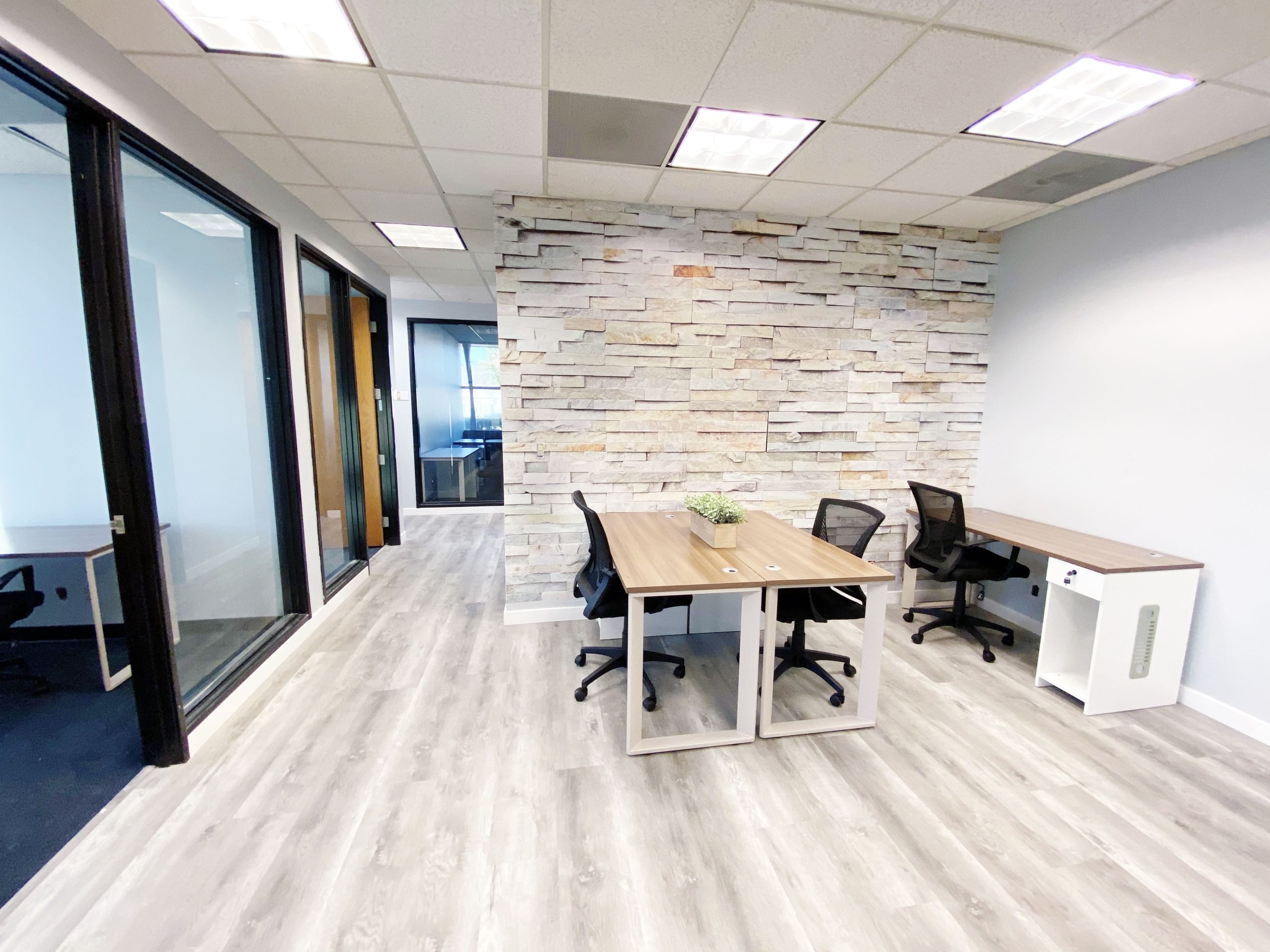
So, how does coworking actually help you sleep? It’s about the Psychology of the Threshold.
When you utilize the amenities at Circle Hub, you aren’t just paying for high-speed internet and free coffee (though, let’s be honest, the coffee is essential). You’re paying for a mental boundary.
Physical Compartmentalization: When you use a private office or a dedicated desk, that space is The Stress Zone. When you walk out that door, you are entering The Life Zone.
The Commute Ritual: Even a short drive or walk to a coworking space acts as a mental reset. It’s the ritual of putting on the armor in the morning and taking it off in the evening.
Professionalism Meets Peace: By keeping the chaos of work stress outside the front door of your home, you allow your house to become a sanctuary again. Your bedroom becomes a place for sleep and intimacy, not a place for Zoom calls.
The High-Performer’s Guide to Recovery
If you want to perform like an elite athlete, you have to recover like one. You can’t redline your engine for 14 hours a day and expect it to cool down the second you turn the key.
Nutrition: Stop using caffeine as a substitute for sleep. If you’re drinking coffee at 4 PM to get through a slump, you’re ensuring that your 11 PM sleep window is going to be a disaster.
Movement: Physical activity is non-negotiable for mitigating work stress. It’s the only way to burn off the excess adrenaline stored in your muscles. Take advantage of the fitness facilities near your workspace or go for a brisk walk between meetings.
Consistency: Your body thrives on rhythm. Try to wake up and go to work at the same time every day. Using a dedicated workspace helps anchor this routine, making it easier for your internal clock to stay synced.
FAQ: Things You’re Too Tired to Google
Can coworking actually improve my sleep quality?
Absolutely. By physically separating your stress zone from your rest zone, you train your brain to stop associating your pillow with spreadsheets. Environmental cues are the strongest drivers of behavior; change the environment, change the output.
How do I tell my boss I’m logging off at 6 PM?
Set clear boundaries early and back them up with high-quality work during the day. A well-rested employee is an asset; a burnt-out zombie is a liability. Use an Out of Office auto-responder that explicitly states when you will be back at your desk.
What is the best way to handle a sudden spike in work stress?
Immediate environmental change. Step away from the screen, leave your current room, and change your physical location. Head to a lounge area or a cafe, and take five minutes to breathe. Oxygen is still free, and a change of scenery can break a panic loop.
Conclusion: Reclaiming the Night
The Work Stress and Sleep Crisis is real, but it isn’t an inevitability. You were not born to be a 24/7 processing unit for corporate data. You were born to think, to create, to connect, and, most importantly, to rest.
As you navigate your career, remind yourself that work stress is not a personality trait, and busy is not a badge of honor. It is a signal that your boundaries need reinforcing. By reclaiming your physical space and choosing a work environment that respects the On/Off switch, you aren’t just becoming more productive; you’re becoming more human.
Ready to get your sleep, and your sanity, back? It might be time to move your office out of your bedroom. Come see how a dedicated space can change your life. Take a tour of Circle Hub today, and remember what it feels like to actually leave work at the office.